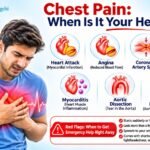
Chest pain is one of the most alarming symptoms anyone can experience. While it can be caused by something as simple as acid reflux or a pulled muscle, it can also be a sign of a serious heart problem. Understanding which types of chest pain are linked to the heart can help you know when to take action—and potentially save a life.
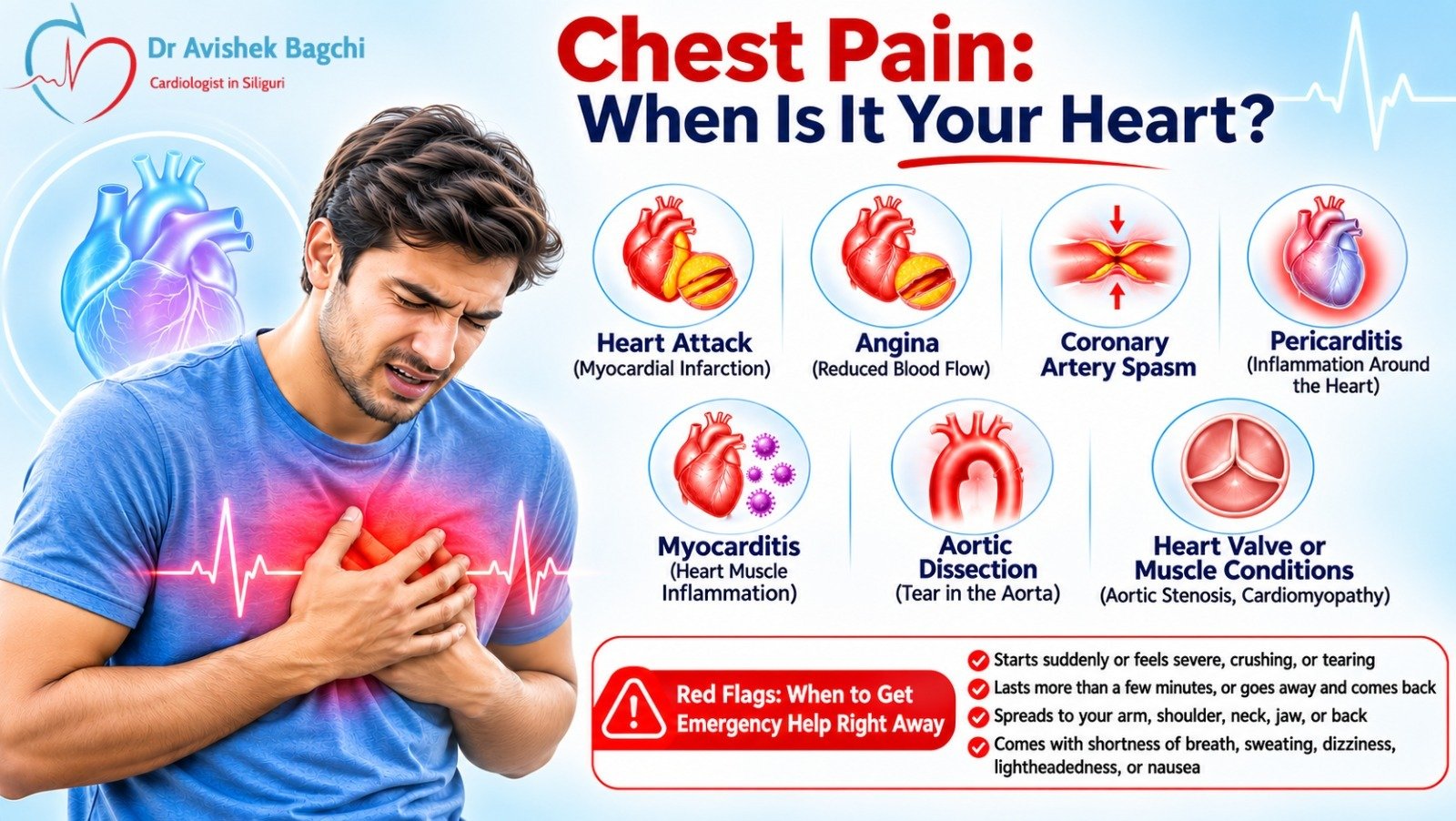
1. Heart Attack (Myocardial Infarction)
A heart attack happens when blood flow to a part of the heart muscle is suddenly blocked, usually by a blood clot. Without oxygen-rich blood, the heart muscle begins to get damaged.
- What it feels like: Often described as a heavy pressure, tightness, squeezing, or fullness in the center or left side of the chest. The pain may spread to your arms, back, neck, jaw, or stomach.
- Other signs: Cold sweats, shortness of breath, nausea, or sudden dizziness. This is a medical emergency—call for emergency help immediately.
2. Angina
Angina is chest pain caused by reduced blood flow to the heart muscle. Think of it as your heart muscle cramping because it isn’t getting enough oxygen, usually because the arteries supplying it have narrowed over time.
- What it feels like: Similar to a heart attack—a dull ache, pressure, or tightness.
- Two main types: Stable angina usually happens when your heart is working harder (like climbing stairs or feeling stressed) and goes away with rest. Unstable angina happens unexpectedly, even while resting, or feels worse than usual. Unstable angina is dangerous and requires urgent medical care.
3. Coronary Artery Spasm
Sometimes, a heart artery suddenly tightens or spasms for a short time, temporarily cutting off blood flow—even in people who do not have clogged arteries.
- What it feels like: Strong chest pain or tightness that often happens at rest, frequently late at night or early in the morning.
4. Pericarditis (Inflammation Around the Heart)
Your heart sits inside a thin, protective sac called the pericardium. If this sac becomes irritated or swollen—often after a viral infection—it is called pericarditis.
- What it feels like: A sharp, stabbing pain in the center or left side of the chest. Unlike a heart attack, this pain often gets worse when you lie flat or take a deep breath, and feels slightly better when you sit up and lean forward.
5. Myocarditis (Heart Muscle Inflammation)
Myocarditis is inflammation of the heart muscle itself, usually triggered by a virus.
- What it feels like: Chest pain or pressure accompanied by flu-like symptoms such as fever, body aches, extreme tiredness, or trouble breathing.
6. Aortic Dissection
The aorta is the largest blood vessel carrying blood out of the heart to the rest of the body. An aortic dissection occurs when a tear develops in its inner wall, causing blood to surge between the layers of the artery wall.
- What it feels like: Sudden, severe, “tearing” or “ripping” pain in the chest or upper back. This is a life-threatening emergency that requires immediate hospital care.
7. Heart Valve or Muscle Conditions
Conditions like aortic stenosis (a narrowed heart valve) or cardiomyopathy (thickened or weakened heart muscle) make the heart work much harder to pump blood.
- What it feels like: Chest tightness, shortness of breath, or feeling faint, especially during exercise or physical exertion.
Red Flags: When to Get Emergency Help Right Away
Never try to “wait out” unexplained chest pain. Seek emergency medical care immediately if your chest pain:
- Starts suddenly or feels severe, crushing, or tearing
- Lasts more than a few minutes, or goes away and comes back
- Spreads to your arm, shoulder, neck, jaw, or back
- Comes with shortness of breath, sweating, dizziness, lightheadedness, or nausea
When it comes to your heart, playing it safe is always the right choice.